


Google Ads cost per click (CPC) can be reduced by improving campaign quality, targeting the right keywords, increasing ad relevance, and optimising every part of the advertising process. Lower CPC does not simply come from reducing bids; it comes from creating campaigns that provide better value to users and Google. Factors such as Quality Score, competition, keyword selection, landing page experience, and account management all influence how much businesses pay for each click.
For Sydney businesses, reducing CPC can help maximise advertising budgets while maintaining visibility in competitive search results. A well-optimised campaign focuses on attracting relevant clicks that have a higher chance of becoming valuable enquiries.
How to Lower Your Google Ads Cost Per Click
Google Ads CPC is affected by multiple campaign factors, including ad quality, competition, targeting, and user experience.
Reducing CPC requires a strategic approach that improves campaign efficiency rather than simply lowering bids and losing valuable traffic.
Improve Your Quality Score
A higher Quality Score can help improve ad performance and reduce CPC.
Google evaluates factors such as expected click-through rate, ad relevance, and landing page experience when determining ad quality. Campaigns that provide a better experience for users are often rewarded with stronger ad positions and potentially lower costs.
Improving Quality Score requires creating relevant ads, choosing suitable keywords, and ensuring your landing pages match user expectations.
Choose More Relevant Keywords
Better keyword targeting helps businesses avoid paying for unnecessary clicks.
Broad keyword targeting can attract users who are not interested in purchasing or contacting a business. Focusing on specific, high-intent keywords helps advertisers reach people who are more likely to take action.
Keyword research should consider:
- Customer search intent
- Competition levels
- Commercial value
- Relevance to business services
A focused keyword strategy can improve traffic quality and help reduce wasted advertising spend.
Use Negative Keywords
Negative keywords help prevent irrelevant searches from triggering ads.
Without negative keyword management, businesses may pay for clicks from users searching for unrelated information. Regularly reviewing search terms allows advertisers to remove poor-quality traffic and improve campaign efficiency.
This process helps ensure advertising budget is spent on searches that are more likely to generate business results.
Improve Ad Relevance and Click-Through Rate
Relevant ads can improve engagement and campaign performance.
When advertisements closely match what users are searching for, they are more likely to receive clicks from interested customers. Strong headlines, clear descriptions, and relevant messaging help improve click-through rates.
Better engagement signals can contribute to improved campaign performance and more efficient CPC.
Optimise Landing Page Experience
The experience after the click directly affects campaign success.
A landing page should provide users with relevant information, fast loading speed, mobile-friendly design, and a clear next step. If visitors cannot quickly understand the service or complete an enquiry, advertising costs may increase because clicks do not produce meaningful outcomes.
Businesses looking to improve campaign results can focus on their conversion rate to get more value from existing traffic.
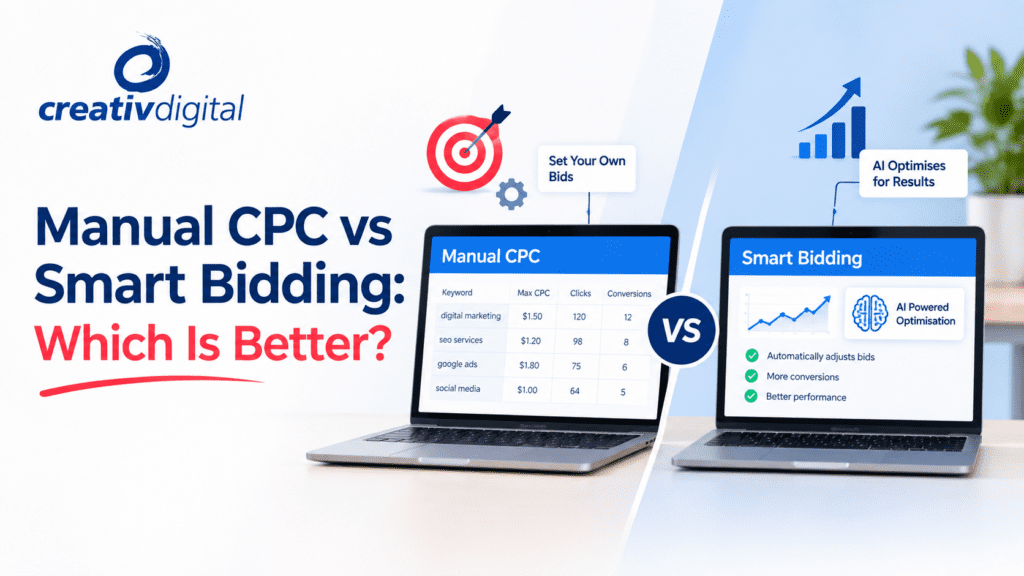
Adjust Bidding Strategies
Smart bidding decisions can help control CPC while maintaining performance.
Google Ads offers different bidding strategies based on campaign goals. Choosing the right approach depends on available conversion data, competition, and business objectives.
Instead of focusing only on the lowest possible click cost, businesses should aim for profitable clicks that contribute to leads and sales.
Improve Geographic Targeting
Location targeting helps businesses avoid paying for unwanted clicks.
For Sydney businesses, accurate geographic targeting ensures ads appear to users within the areas they actually serve. Incorrect location settings can waste budget by attracting visitors who are unlikely to become customers.
Refining locations, audiences, and scheduling settings can help improve overall campaign efficiency.
Review Search Terms Regularly
Search term analysis helps identify opportunities to reduce unnecessary spending.
Regular reviews can reveal:
- Irrelevant searches
- Expensive keywords with poor results
- New keyword opportunities
- Customer search behaviour
Making adjustments based on real search data helps improve targeting and control CPC over time.
Maintain Continuous Campaign Optimisation
Google Ads requires ongoing management to achieve consistent improvements.
Regular optimisation includes testing ads, updating keywords, adjusting bids, analysing performance, and removing underperforming elements.
Working with a professional Google Ads expert can help businesses create a structured approach to campaign improvement and reduce wasted advertising spend through data-driven decisions.
Understand Competition and Market Conditions
Competition affects how much businesses pay for clicks.
Highly competitive industries often have higher CPC because multiple advertisers are targeting similar keywords. Businesses need a combination of strong targeting, quality ads, and effective optimisation to compete efficiently.
Understanding how campaign performance changes over time is also important. Businesses can learn more about the expected optimisation process through the Google Ads timeline.
Avoid Common CPC Mistakes
Small campaign errors can increase advertising costs.
Common issues include:
- Targeting overly broad keywords
- Ignoring search term reports
- Poor ad relevance
- Weak landing pages
- Incorrect campaign settings
- Lack of regular optimisation
Avoiding common Google Ads mistakes helps businesses improve efficiency and make better use of their advertising budget.
Conclusion: Lower CPC Comes From Better Campaign Optimisation
Lowering Google Ads cost per click is not only about reducing bids. The most effective approach is improving campaign quality through better keywords, relevant ads, stronger landing pages, accurate targeting, and continuous optimisation.
For Sydney businesses, a well-managed Google Ads strategy can help achieve more valuable clicks while controlling advertising costs. By focusing on user intent and campaign performance, businesses can improve efficiency and build stronger long-term results from paid search advertising.