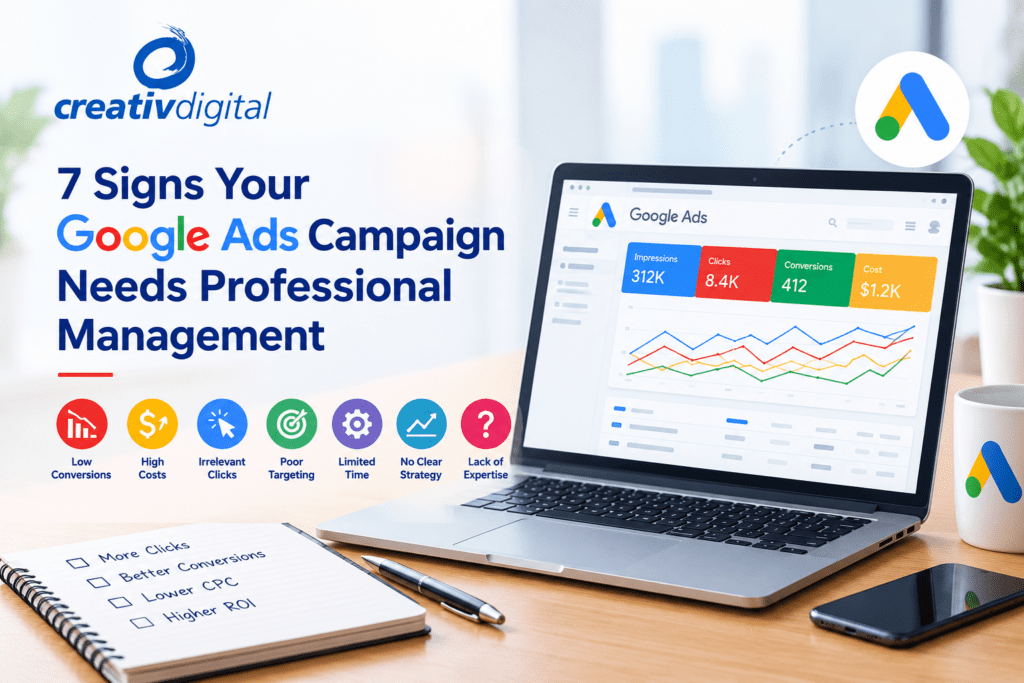



Improving your Google Ads conversion rate starts with making sure the right people see relevant ads and arrive on a landing page that makes it easy to take action. If your campaigns are generating clicks but few enquiries or sales, the problem may be keyword targeting, ad messaging, landing page experience, conversion tracking or the overall customer journey. Google recommends using conversion tracking to measure valuable actions and then using that data to identify opportunities for improvement.
How to Improve Your Google Ads Conversion Rate
A higher conversion rate comes from improving the connection between your keywords, ads, landing pages and customer intent.
1. Target More Relevant Keywords
Your conversion rate can suffer when your ads appear for searches that are too broad or unrelated to what you offer. More specific keywords can help attract people with stronger commercial intent, although targeting should still provide enough search volume to generate meaningful traffic.
Review your search terms regularly and identify searches that generate relevant enquiries or sales. You can then refine your keyword targeting and add negative keywords where necessary.
2. Match Your Ads to Search Intent
People are more likely to respond when your ad closely matches what they searched for. Your headlines and descriptions should clearly communicate the service or product being offered and give users a reason to take the next step.
Google recommends aligning ad copy with keywords and testing different headlines, descriptions and calls to action to identify what performs best.
For Sydney businesses, this could also mean making your location and service area clear when local intent is important.
3. Improve Your Landing Pages
A click only becomes valuable when the visitor can quickly understand what you offer and what they should do next. Your landing page should closely match the ad and keyword that brought the visitor there.
Make your primary call to action easy to find, keep important information clear and remove unnecessary distractions. Google also highlights mobile optimisation and landing page speed as important considerations for improving conversion performance.
4. Use Clear Calls to Action
Your landing page should make the desired next step obvious. Depending on your business, that could be requesting a quote, calling your business, booking an appointment, submitting an enquiry or purchasing a product.
The call to action should also match the promise made in your ad. When the ad, landing page and CTA are aligned, visitors have a clearer path towards conversion.
5. Fix Conversion Tracking
You cannot reliably improve conversion performance if you do not know which actions count as conversions or whether they are being recorded correctly.
Set up tracking for meaningful actions such as enquiry forms, purchases and relevant phone calls. Google Ads conversion measurement can help identify which campaigns, keywords and ads are contributing to valuable customer activity.
If your campaign is receiving clicks but appears to have very few conversions, checking your tracking setup should be one of the first steps.
6. Focus on Quality, Not Just Clicks
A campaign can generate plenty of traffic without producing enough business. Looking only at clicks or click-through rate can therefore give an incomplete picture of performance.
Instead, assess which keywords, ads and campaigns are generating meaningful enquiries or sales. If you’re experiencing traffic without results, reviewing clicks but no conversions can help identify potential issues with targeting, landing pages or the customer journey.
7. Make Your Offer Clear
Potential customers need to understand why they should choose your business. Your ads and landing pages should communicate the value of your offer clearly rather than relying on generic messaging.
Depending on your business, this could involve highlighting your service, location, availability, pricing information, experience or another genuine point of difference. Clear information can help users decide whether your business is relevant before they submit an enquiry.
8. Review Underperforming Campaigns
Conversion rate optimisation is an ongoing process. Review campaign performance regularly to identify keywords, ads and landing pages that are not producing the results you want.
It is also worth reviewing common campaign issues. Our guide to Google Ads mistakes covers problems that can contribute to wasted budget and weaker performance.
9. Consider How Your Campaign Is Managed
Improving conversion rates often requires ongoing keyword research, search-term analysis, ad testing, landing page improvements and performance monitoring. For some businesses, managing these tasks internally can become difficult alongside day-to-day operations.
If you are deciding between managing campaigns yourself and getting professional support, comparing Google Ads agency vs freelancer can help you understand the different approaches.
A Sydney-based Google Ads agency can also provide a structured approach to campaign management, testing and optimisation around your business objectives.
10. Optimise Based on Business Value
Not every conversion has the same value. A completed purchase, qualified enquiry and simple website interaction can represent very different outcomes for a business.
Where appropriate, assign meaningful conversion values so you can assess campaign performance by business impact rather than conversion volume alone. Google notes that conversion values can help advertisers understand and optimise for the value generated by campaigns.
Conclusion
Improving your Google Ads conversion rate is not about simply increasing traffic. It requires a connected approach across keyword targeting, ad relevance, landing page experience, calls to action, conversion tracking and ongoing optimisation.
For businesses targeting customers in Sydney, a structured Google Ads strategy can turn more relevant searches into genuine enquiries and sales. If you need ongoing support, professional Google Ads services can help align campaign management with your wider business goals.